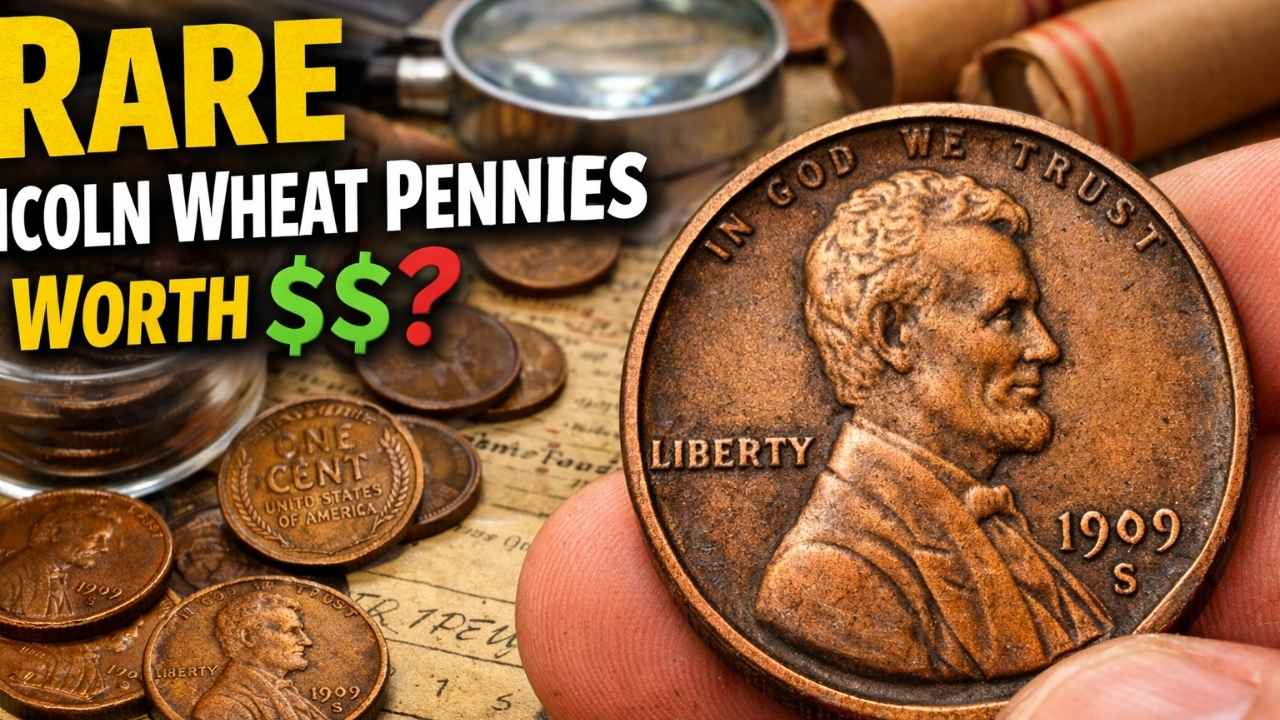
Rare Lincoln Wheat Pennies Worth Collecting: Imagine reaching into your pocket for spare change and discovering that one ordinary looking quarter could be worth millions. It sounds like a dream, but stories about a Bicentennial Quarter valued at 5 million dollars have captured the attention of collectors and everyday people alike. The idea that such a valuable coin could still be found in circulation adds even more excitement to the story.
The Bicentennial Quarter was created to celebrate the 200th anniversary of American independence. In 1976, the United States marked two centuries since the signing of the Declaration of Independence. To honor this milestone, the U.S. Mint released special designs for the quarter, half dollar, and dollar coins. Among them, the Bicentennial Quarter quickly became one of the most recognizable commemorative coins in American history.

The Unique Design of the 1776 to 1976 Quarter
Unlike regular quarters that display a single year, the Bicentennial Quarter features the dual date 1776 to 1976 on the obverse. The familiar portrait of George Washington remains on the front, but the reverse design is completely different from standard quarters.
The back of the coin shows a colonial drummer boy, symbolizing the spirit of the American Revolution. The design was created by artist Jack L. Ahr and selected through a national competition. Surrounding the drummer is a torch encircled by thirteen stars, representing the original thirteen colonies.
This special design makes the Bicentennial Quarter easy to spot. Millions of Americans remember seeing these coins in their change during the late 1970s and early 1980s. Because they were produced in large numbers, most Bicentennial Quarters are still worth only twenty five cents. However, a small number of rare variations can be worth far more.
Why Some Bicentennial Quarters Are Extremely Valuable
So how can a common coin become worth 5 million dollars? The answer lies in rarity, minting errors, condition, and composition.

Most Bicentennial Quarters were struck in copper nickel clad for circulation. However, a limited number were produced in 40 percent silver for collectors. These silver versions were sold in special mint sets and were never intended for everyday use. If one of these silver coins accidentally entered circulation and remained in near perfect condition, its value could rise significantly.
Even more valuable are error coins. During the minting process, mistakes can occur. These errors may include double strikes, off center designs, incorrect planchets, or wrong metal compositions. If a Bicentennial Quarter were mistakenly struck on a silver planchet meant for another coin, or if it featured a dramatic double die error, collectors would consider it extremely rare.
When rarity combines with outstanding preservation, the value can skyrocket. Coins graded at the highest levels by professional grading services often sell for thousands or even hundreds of thousands of dollars. In very rare circumstances, a unique error coin in flawless condition could reach extraordinary valuations, potentially even millions.
The Story Behind the 5 Million Dollar Claim
The claim of a Bicentennial Quarter worth 5 million dollars likely comes from reports of an ultra rare mint error or a unique specimen discovered in circulation. In the world of coin collecting, even a single known example of a dramatic error can command astonishing prices at auction.
For example, certain rare American coins have sold for millions due to their historical importance and scarcity. While most Bicentennial Quarters are common, the possibility that one extraordinary piece exists keeps collectors searching through their change.
It is important to note that not every article or social media post accurately represents coin values. Some headlines are exaggerated to attract attention. However, there are verified cases where seemingly ordinary coins turned out to be worth life changing amounts because of rare minting anomalies.
How to Identify a Valuable Bicentennial Quarter
If you are curious whether your Bicentennial Quarter could be valuable, there are several factors to examine.
First, check the mint mark. Quarters minted in Philadelphia typically have no mint mark, while those from Denver carry a D. Coins from San Francisco may have an S mint mark and are often part of special proof or silver issues.
Second, look at the edge of the coin. A standard copper nickel clad quarter will show a visible copper stripe along the edge. A silver quarter will have a solid silver colored edge with no copper band.
Third, inspect the coin for errors. Use a magnifying glass to look for doubling in the lettering, misaligned designs, or unusual features. If something appears noticeably different from a normal quarter, it may be worth further investigation.
Finally, consider the condition. Coins that appear uncirculated with sharp details and no visible wear are more desirable. Scratches, discoloration, and heavy wear reduce value significantly.
The Role of Professional Grading
If you believe you have a rare Bicentennial Quarter, the next step is professional evaluation. Organizations such as the Professional Coin Grading Service and the Numismatic Guaranty Company specialize in authenticating and grading coins.
These companies assign a grade based on the coin’s condition, using a standardized scale. They also verify whether a coin is genuine and identify any mint errors. A high grade from a respected grading service can significantly increase a coin’s market value.
Professional certification provides confidence to buyers and sellers. Without authentication, it is difficult to achieve premium prices, especially for coins claimed to be worth thousands or millions.

Could a Rare Coin Still Be in Circulation
It may seem unlikely, but valuable coins do occasionally slip into circulation. Over the years, people have unknowingly spent rare coins simply because they did not recognize their worth.
Estate collections are sometimes mixed into everyday change. In other cases, heirs inherit coin collections and spend them without realizing their potential value. While the odds are small, the possibility remains that a rare Bicentennial Quarter could still be out there.
This slim chance fuels the excitement. Every time someone checks their pocket change, there is a tiny spark of hope that they might uncover a hidden treasure.
The Growing Popularity of Coin Collecting
Stories like the 5 million dollar Bicentennial Quarter have sparked renewed interest in coin collecting. Both beginners and experienced numismatists enjoy the thrill of the hunt.
Coin collecting offers more than just financial opportunity. It connects people to history, art, and culture. Each coin tells a story about the time in which it was made. The Bicentennial Quarter, in particular, represents a moment of national celebration and pride.
Collectors often start small, examining everyday coins for interesting dates, mint marks, or errors. Over time, knowledge grows, and so does the collection. Even if a person never finds a million dollar coin, the hobby itself can be rewarding.
Final Thoughts on the 5 Million Dollar Quarter
While most Bicentennial Quarters are worth only their face value, the idea that one rare example could be worth 5 million dollars continues to capture imaginations. Whether the claim is based on a unique mint error or an exceptionally rare silver specimen, the story highlights an important lesson.
Sometimes extraordinary value hides in ordinary places. A simple coin passed from hand to hand for decades could turn out to be a remarkable piece of history.
If you have a Bicentennial Quarter, take a closer look. Examine the details, check the edge, and consider its condition. You may not find a fortune, but you will gain a deeper appreciation for one of America’s most iconic commemorative coins.