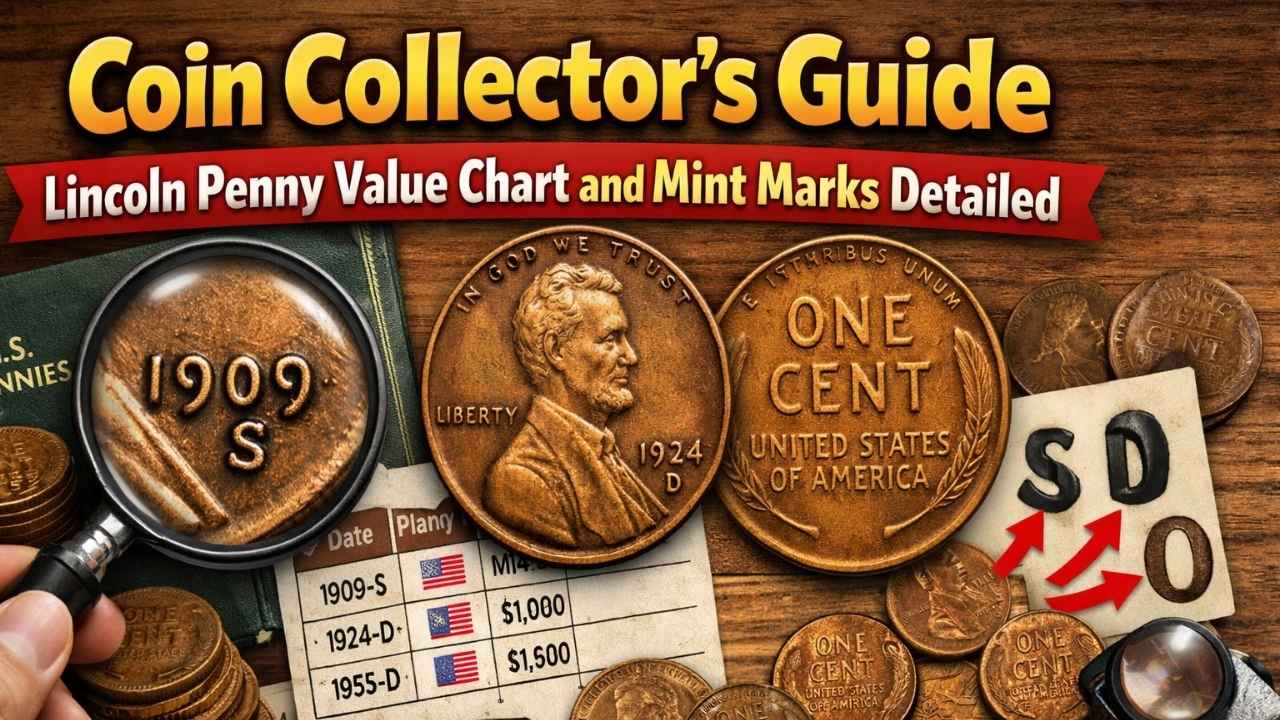
Coin Collector’s Guide 2026: The Lincoln penny has been in circulation since 1909, making it one of the longest-running coin designs in American history. It was introduced to commemorate the centennial of Abraham Lincoln’s birth and quickly became a symbol of national pride. Over the decades, subtle changes in design, composition, and mint marks have created a rich field of study for collectors. In 2026, the Lincoln penny continues to fascinate numismatists and casual hobbyists alike.
Evolution of the Design
The original Lincoln penny featured Victor David Brenner’s portrait of Abraham Lincoln on the obverse and two wheat stalks on the reverse. This design, known as the Wheat Cent, remained until 1958. In 1959, the reverse was changed to the Lincoln Memorial, and in 2010, it was replaced again with a shield design. Each transition reflects shifts in American culture and numismatic priorities.

Mint Marks and Their Importance
Mint marks are small letters on coins that indicate where they were produced. For Lincoln pennies, the most common mint marks are:
- P for Philadelphia
- D for Denver
- S for San Francisco
Mint marks can dramatically affect a coin’s value. A penny without a mint mark usually comes from Philadelphia, while coins from Denver and San Francisco often have smaller mintages, making them more desirable to collectors.
Composition Changes Over Time
The Lincoln penny has undergone several changes in composition. From 1909 to 1942, it was primarily copper. During World War II, in 1943, pennies were made of steel coated with zinc to conserve copper for the war effort. Afterward, copper returned until 1982, when the Mint shifted to copper-plated zinc. These changes influence both the coin’s appearance and its collectibility.
Table of Compositions
| Years | Composition | Notes |
|---|---|---|
| 1909–1942 | 95% copper, 5% tin and zinc | Wheat Cent era |
| 1943 | Zinc-coated steel | Wartime issue |
| 1944–1982 | 95% copper, 5% zinc | Post-war copper cents |
| 1982 onward | Copper-plated zinc | Modern era |
Value Chart for 2026
The value of a Lincoln penny depends on its year, mint mark, and condition. While most pennies are worth only face value, rare issues can command significant premiums.
Lincoln Penny Value Chart (2026 Estimates)
| Year | Mint Mark | Condition (Fine) | Condition (Uncirculated) | Notes |
|---|---|---|---|---|
| 1909 S VDB | S | $700 | $2,000+ | Highly sought after |
| 1914 D | D | $150 | $1,500+ | Key date |
| 1922 No D | None | $400 | $2,000+ | Mint error |
| 1943 Steel | P, D, S | $0.25 | $10 | Wartime issue |
| 1955 Double Die | P | $1,000 | $15,000+ | Famous error |
| 1972 Double Die | P | $50 | $500 | Popular variety |
| 1982 Small Date Copper | P, D | $20 | $200 | Transitional year |
| 2009 Bicentennial Designs | P, D, S | $0.10 | $5 | Modern collectible |
Famous Errors and Varieties
Lincoln pennies are known for their fascinating errors and varieties. The 1955 Double Die Obverse is one of the most famous, with its dramatic doubling of the date and lettering. The 1922 No D penny is another rarity, created when the Denver Mint accidentally struck coins without a mint mark. These errors are highly prized and can fetch thousands of dollars at auction.
Collecting Strategies in 2026
For collectors, the Lincoln penny offers endless opportunities. Beginners often start with assembling a complete set of Wheat Cents, while advanced collectors pursue rare varieties and high-grade examples. Preservation is key: coins should be stored in protective holders to prevent damage. Professional grading services can authenticate and assign value, ensuring confidence in transactions.

The Cultural Impact of the Lincoln Penny
Beyond its monetary value, the Lincoln penny holds cultural significance. It is a reminder of Abraham Lincoln’s legacy and the ideals of unity and perseverance. For generations, children have collected pennies as their first introduction to numismatics, making it a gateway to the broader world of coin collecting.
Conclusion
The Lincoln penny remains one of the most beloved coins in American history. Its long production run, diverse mint marks, and fascinating errors make it a cornerstone of numismatic study. In 2026, collectors continue to treasure these coins, not only for their financial value but also for the stories they tell about America’s past. Whether you are a seasoned numismatist or a curious beginner, the Lincoln penny offers a journey through history, art, and culture that is as rewarding as it is enduring.