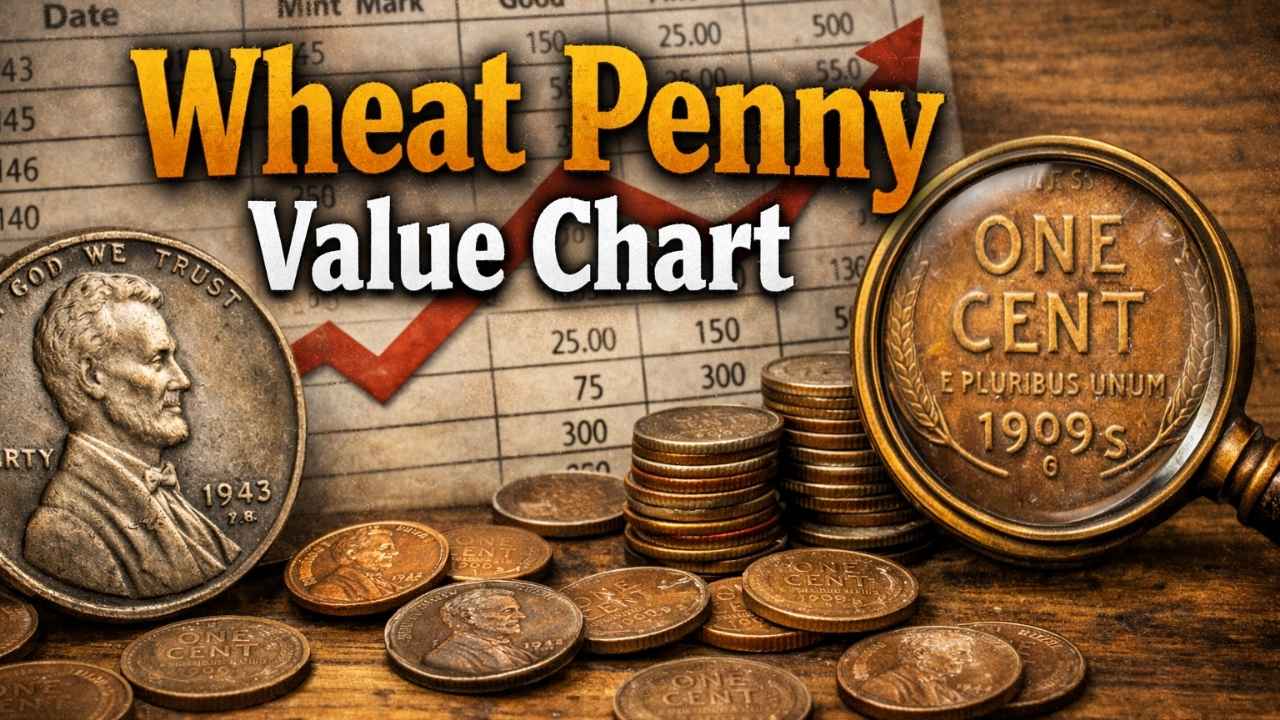
2026 Wheat Penny Value Chart: The wheat penny, officially known as the Lincoln Wheat Cent, remains one of the most beloved coins among collectors. First minted in 1909 to honor Abraham Lincoln’s centennial birthday, these coins circulated until 1958. Their iconic reverse design featuring two wheat stalks gave them their nickname. In 2026, wheat pennies continue to attract attention not only for their historical significance but also for their rarity, mint errors, and evolving market values.
The Historical Significance of Wheat Pennies
The introduction of the Lincoln cent marked a turning point in American coinage. It was the first circulating coin to feature a real person rather than a symbolic figure. Victor David Brenner’s design captured Lincoln’s profile with dignity, while the wheat stalks symbolized prosperity. Over the decades, wheat pennies became a fixture in everyday commerce, and today they serve as nostalgic reminders of mid‑20th‑century America.

Collectors value wheat pennies not only for their monetary worth but also for their cultural resonance. They represent a period when coinage was both practical and artistic, and they connect modern hobbyists to generations of Americans who once carried these coins in their pockets.
Rare Dates That Command Premiums
Not all wheat pennies are created equal. Certain dates and mint marks stand out for their scarcity, making them highly desirable. Among the most famous are:
- 1909‑S VDB: The inaugural issue with Brenner’s initials prominently displayed. Only 484,000 were minted, making it one of the crown jewels of the series.
- 1914‑D: With a low mintage from the Denver Mint, this coin is notoriously difficult to find in high grades.
- 1922 No D: A fascinating variety where the Denver Mint mark was accidentally omitted, creating a rare collectible.
- 1931‑S: Struck during the Great Depression, this coin had a limited production run of fewer than one million.
- 1955 Double Die Obverse: Perhaps the most famous error penny, with dramatic doubling visible in the date and lettering.
These coins often sell for hundreds or even thousands of dollars depending on condition, and they remain the cornerstone of many collections.
Mint Errors That Add Value
Beyond rare dates, mint errors elevate certain wheat pennies into legendary status. Errors occur when something goes wrong during the striking process, and collectors prize them for their uniqueness. Common error types include:
- Double dies: Where the design elements appear doubled, as seen in the 1955 example.
- Off‑center strikes: Coins struck outside the proper alignment, leaving part of the design missing.
- Die cracks and cuds: Raised lines or blobs caused by damaged dies.
- Repunched mint marks: Visible evidence of a mint mark being stamped more than once.
While not every error coin is valuable, dramatic and well‑preserved examples can command significant premiums.
Historical Price Trends
The value of wheat pennies has fluctuated over time, influenced by collector demand, economic conditions, and the availability of high‑grade specimens. In the mid‑20th century, wheat pennies were still common in circulation, and collectors could find them in pocket change. By the 1970s and 1980s, interest in coin collecting surged, driving prices upward for key dates.
In recent decades, the market has matured. Rare varieties like the 1909‑S VDB and 1955 Double Die have consistently held strong values, while more common dates remain affordable entry points for beginners. Auction records show that pristine examples in mint state can fetch astonishing sums, reflecting the enduring appeal of these coins.
The 2026 Value Chart
As of 2026, wheat penny values vary widely depending on rarity and condition. A general chart looks like this:

| Date / Variety | Average Circulated Value | Mint State Value |
|---|---|---|
| 1909‑S VDB | $700–$1,200 | $2,500+ |
| 1914‑D | $150–$300 | $2,000+ |
| 1922 No D | $500–$1,000 | $5,000+ |
| 1931‑S | $50–$100 | $500+ |
| 1955 Double Die | $1,000–$2,500 | $10,000+ |
| Common 1940s–50s | $0.10–$1.00 | $5–$20 |
This chart reflects average market trends, but individual coins may sell for more or less depending on grading, eye appeal, and demand.
Collecting Strategies for Enthusiasts
For those entering the hobby, wheat pennies offer a perfect balance of accessibility and challenge. Common dates are inexpensive and easy to find, while rare varieties provide long‑term goals. Collectors often pursue complete date‑and‑mint sets, which can be rewarding but require patience.

Grading is crucial. A coin’s condition dramatically affects its value, so learning to distinguish between circulated and mint state examples is essential. Professional grading services can provide certification, ensuring authenticity and protecting investment.
The Future of Wheat Penny Collecting
Looking ahead, wheat pennies will likely continue to rise in prominence as younger generations discover the hobby. Their historical charm, combined with the thrill of hunting for rare dates and errors, ensures lasting appeal. As digital marketplaces expand, collectors worldwide can access coins once limited to local shops and shows, further fueling demand.
The wheat penny’s legacy is secure. More than just small copper discs, they are tangible pieces of history, connecting collectors to America’s past while offering the excitement of discovery and investment.
Conclusion
The 2026 wheat penny value chart highlights the enduring fascination with these coins. Rare dates like the 1909‑S VDB and mint errors such as the 1955 Double Die remain highly prized, while common issues provide affordable entry points. Historical price trends show steady growth for key varieties, and the future promises continued interest from collectors worldwide. Whether pursued for nostalgia, investment, or the sheer joy of the hunt, wheat pennies remain a cornerstone of numismatics.