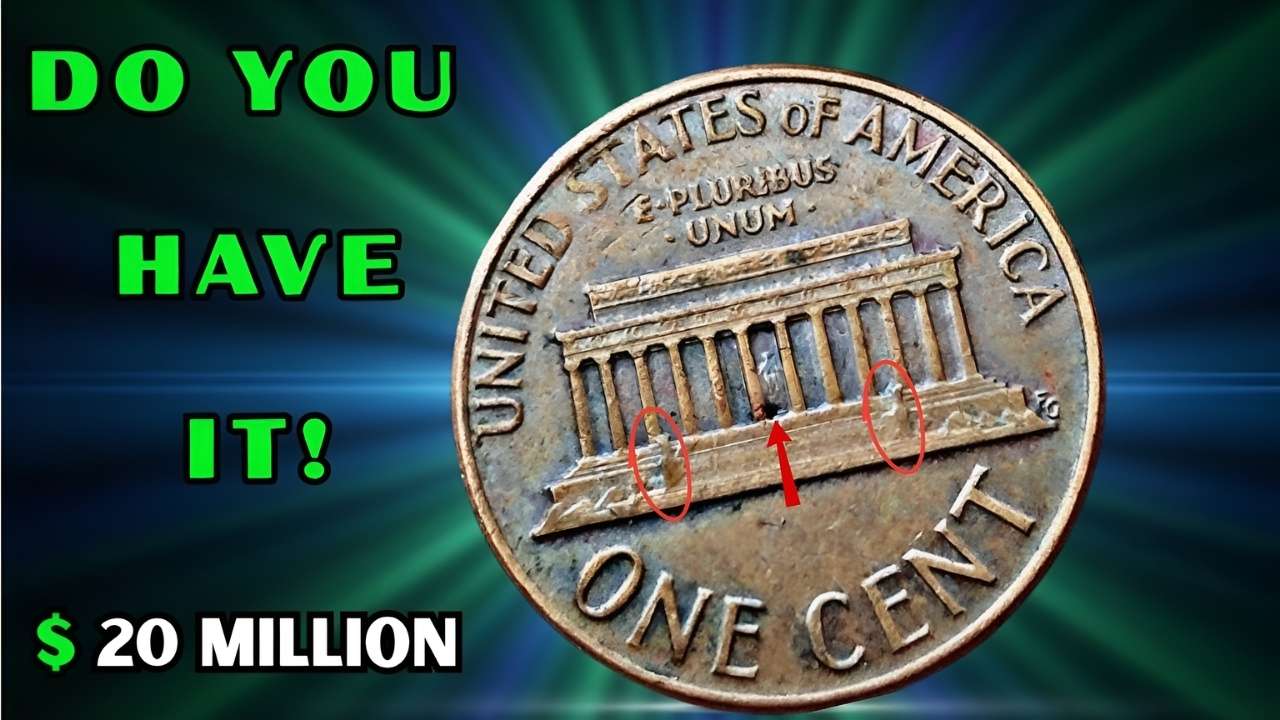
Rare Lincoln Pennies Worth Big Money in 2026: The Lincoln Penny is one of the most iconic coins in American history. First introduced in 1909 to honor President Abraham Lincoln’s centennial birthday, it has remained in circulation for more than a century. While most Lincoln Pennies are common and worth only their face value, certain rare dates, mint marks, and error varieties can be worth thousands or even hundreds of thousands of dollars. In 2026, collectors continue to pay big money for these rarities, making them both fascinating historical artifacts and valuable investments.
The Birth of the Lincoln Penny
The Lincoln Penny was designed by Victor David Brenner and became the first U.S. coin to feature a real person rather than a symbolic figure. Its reverse originally displayed two wheat stalks, symbolizing prosperity, and this design lasted until 1958. In 1959, the reverse was changed to the Lincoln Memorial, and later to the Union Shield in 2010. Each design era has produced its own rarities, but the Wheat Pennies remain the most sought after.

Why Some Pennies Are Worth Big Money
The value of a Lincoln Penny depends on several factors:
- Mintage numbers: Coins with low production runs are naturally scarcer.
- Mint marks: Pennies struck in Denver (D) and San Francisco (S) often had smaller mintages compared to Philadelphia.
- Condition: Coins in uncirculated or proof condition are worth far more than worn examples.
- Errors and varieties: Doubled dies, off-center strikes, and missing mint marks can create unique coins that collectors prize.
- Historical significance: Coins tied to major events or transitions in design often carry added value.
Key Rare Lincoln Pennies
Several Lincoln Pennies stand out as especially valuable in 2026:
- 1909-S VDB: The most famous rarity, with only 484,000 minted. High-grade examples can exceed $100,000.
- 1914-D: A Denver issue with low mintage, often selling for more than $50,000 in uncirculated condition.
- 1922 No D: A variety where the Denver mint mark is missing due to a worn die. Rare and highly valuable.
- 1931-S: With fewer than one million struck, this coin is prized in high grades.
- 1943 Copper Penny: Mistakenly struck on copper planchets during World War II, these coins can sell for hundreds of thousands.
- 1944 Steel Penny: A rare error where leftover steel blanks were used instead of copper, worth tens of thousands.
- 1955 Doubled Die: Famous for its dramatic doubling in the date and lettering, valued at $50,000 or more in pristine condition.
- 1969-S Doubled Die: A modern rarity with strong doubling, worth over $75,000 in top grades.
- 1972 Doubled Die: Another doubled die variety, less rare but still valuable in high condition.
- 1992 Close AM: A rare variety where the letters “A” and “M” in “AMERICA” are unusually close, worth thousands.
Mint Marks and Their Importance
Mint marks are small letters on coins that indicate where they were produced. Lincoln Pennies were struck at Philadelphia (no mint mark), Denver (D), and San Francisco (S). Coins from Denver and San Francisco often had smaller mintages, making them more valuable. Collectors pay close attention to mint marks when assessing rarity and value.
Full Value Chart
While exact values fluctuate with the market, here is a general guide for rare Lincoln Pennies in 2026:
| Year | Mint/Variety | Estimated Value (High Grade) |
|---|---|---|
| 1909-S VDB | San Francisco | $100,000+ |
| 1914-D | Denver | $50,000–$150,000 |
| 1922 No D | Denver | $75,000+ |
| 1931-S | San Francisco | $50,000+ |
| 1943 Copper | Philadelphia/Denver/San Francisco | $250,000–$1,000,000 |
| 1944 Steel | Philadelphia/Denver/San Francisco | $75,000–$200,000 |
| 1955 Doubled Die | Philadelphia | $50,000–$125,000 |
| 1969-S Doubled Die | San Francisco | $75,000–$150,000 |
| 1972 Doubled Die | Philadelphia | $10,000–$50,000 |
| 1992 Close AM | Philadelphia/Denver | $20,000–$50,000 |
How to Spot Rare Pennies
Collectors and even casual coin enthusiasts can look for rare pennies by:
- Checking dates and mint marks: Focus on key years like 1909, 1914, 1922, 1931, 1943, and 1955.
- Examining details: Look closely for doubling, unusual spacing, or missing mint marks.
- Weighing coins: Silver or copper coins weigh slightly more than clad versions.
- Using magnification: A magnifying glass helps spot subtle errors and varieties.
The Role of Professional Grading
Professional grading services such as PCGS and NGC provide authentication and standardized evaluation. Coins certified by these services carry greater trust and value in the marketplace. For coins suspected to be rare or valuable, submitting them for grading is essential to determine their true worth.
Collecting Strategies
For those interested in Lincoln Pennies, building a collection can be rewarding. Strategies include:
- Starting with Wheat Pennies: Affordable and historically significant.
- Seeking proof sets: Proof coins often have sharper details and higher value.
- Exploring error coins: Errors add uniqueness and can be surprisingly valuable.
- Completing sets: Collecting by year and mint mark provides structure and challenge.
Investment Potential
Rare Lincoln Pennies highlight the investment potential of numismatics. While most coins will never reach multimillion-dollar values, key dates and rare varieties often appreciate over time. Collectors who focus on quality and rarity can build collections that serve both as hobbies and investments.
Conclusion
Lincoln Pennies remain one of the most beloved coins in American history. Their rare varieties continue to inspire collectors worldwide, with values that can exceed $50,000 or even reach hundreds of thousands. By learning how to spot these rarities and understanding their historical context, collectors can uncover treasures that connect them to the past and enrich their collections for years to come. In 2026, the Lincoln Penny stands as both a symbol of American heritage and a gateway to big money in the world of coin collecting.