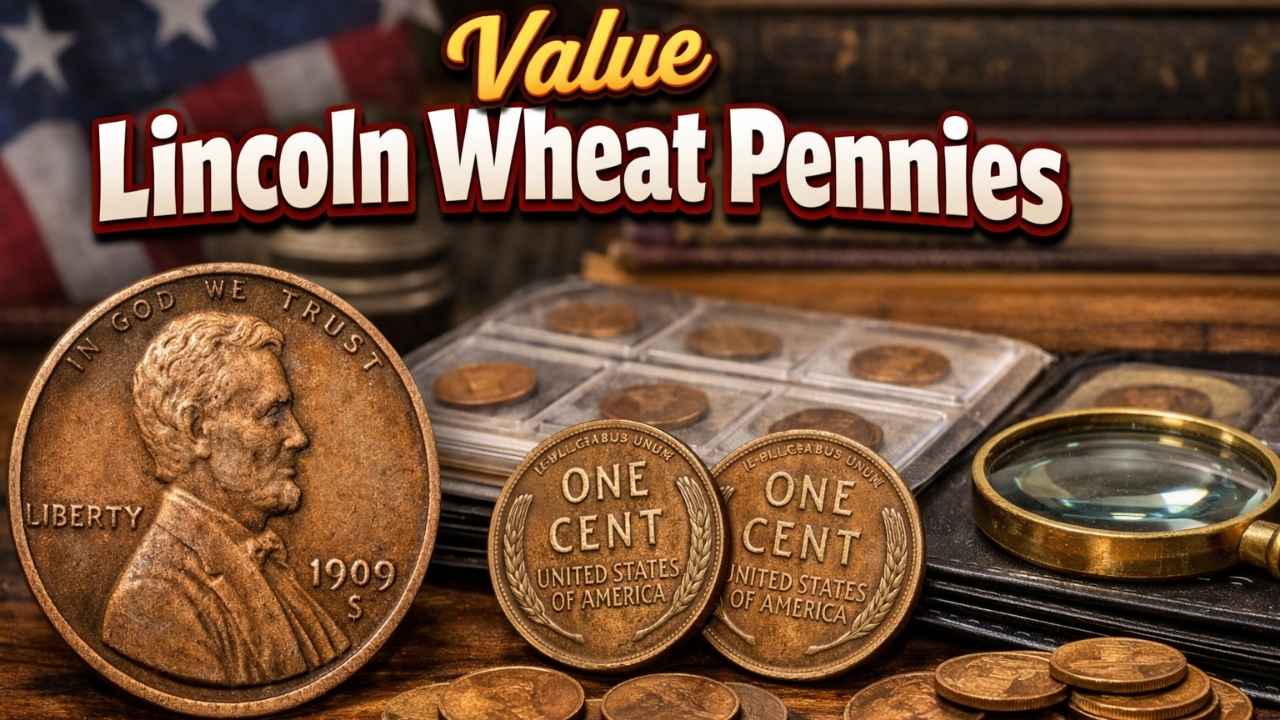
Coin Collecting Tips: The Lincoln Wheat Penny was first minted in 1909 to honor the centennial of Abraham Lincoln’s birth. Designed by Victor David Brenner, it was the first U.S. coin to feature a real president’s portrait. On the reverse, two wheat stalks framed the denomination, symbolizing prosperity and growth. This design remained in use until 1958, when the reverse was changed to the Lincoln Memorial.
Understanding Mint Marks
Mint marks are small letters on coins that indicate where they were produced. For Lincoln Wheat Pennies, the most common mint marks are:
- No mark for Philadelphia
- D for Denver
- S for San Francisco
Mint marks can significantly affect value. Coins from Denver and San Francisco often had smaller mintages, making them more desirable to collectors.
Composition and Characteristics
Lincoln Wheat Pennies were primarily made of copper, with slight variations during wartime. In 1943, due to copper shortages, the U.S. Mint produced pennies from zinc-coated steel. These steel cents are among the most famous varieties and are easily distinguishable by their silver-gray color.
Table of Compositions
| Years | Composition | Notes |
|---|---|---|
| 1909–1942 | 95% copper, 5% zinc and tin | Classic Wheat Penny era |
| 1943 | Zinc-coated steel | Wartime issue |
| 1944–1958 | 95% copper, 5% zinc | Post-war copper cents |
Famous Errors and Varieties
Collectors prize certain Wheat Pennies for their errors and unique varieties. Some of the most notable include:
- 1909 S VDB: A low-mintage coin with designer initials, highly sought after.
- 1914 D: Considered a key date due to scarcity.
- 1922 No D: An error where the Denver mint mark was accidentally omitted.
- 1955 Double Die: Famous for its dramatic doubling of the date and lettering.
These coins can command thousands of dollars depending on condition.
Value Chart for 2026
The value of Lincoln Wheat Pennies varies widely depending on year, mint mark, and condition. While many are worth only a few cents, rare issues can be worth hundreds or even thousands.
Estimated Values in 2026
| Year | Mint Mark | Condition (Fine) | Condition (Uncirculated) | Notes |
|---|---|---|---|---|
| 1909 S VDB | S | $700 | $2,000+ | Highly sought after |
| 1914 D | D | $150 | $1,500+ | Key date |
| 1922 No D | None | $400 | $2,000+ | Mint error |
| 1943 Steel | P, D, S | $0.25 | $10 | Wartime issue |
| 1955 Double Die | P | $1,000 | $15,000+ | Famous error |
How to Identify Valuable Wheat Pennies
Collectors should carefully examine coins for date, mint mark, and condition. Using magnification helps detect doubling, missing mint marks, or other anomalies. Comparing coins to reference guides ensures accurate identification. Coins in pristine condition, especially those with rare mint marks or errors, are the most valuable.
Preservation and Collecting Tips
To maintain value, Wheat Pennies should be stored in protective holders or albums. Avoid cleaning coins, as this can reduce their worth. Professional grading services can authenticate coins and assign value, which is especially important for rare varieties. Building a complete set from 1909 to 1958 is a popular goal among collectors.
Cultural Significance
Beyond monetary value, the Lincoln Wheat Penny holds cultural importance. It represents the legacy of Abraham Lincoln and the ideals of unity and perseverance. For many, it was the first coin that sparked interest in numismatics, making it a gateway to the world of collecting.
Conclusion
Lincoln Wheat Pennies remain one of the most beloved coins in American history. Their long production run, diverse mint marks, and fascinating errors make them a cornerstone of coin collecting. In 2026, they continue to captivate collectors, offering both financial value and a tangible connection to America’s past. Whether you are a seasoned numismatist or a beginner, Wheat Pennies provide a rewarding journey into history, art, and culture.