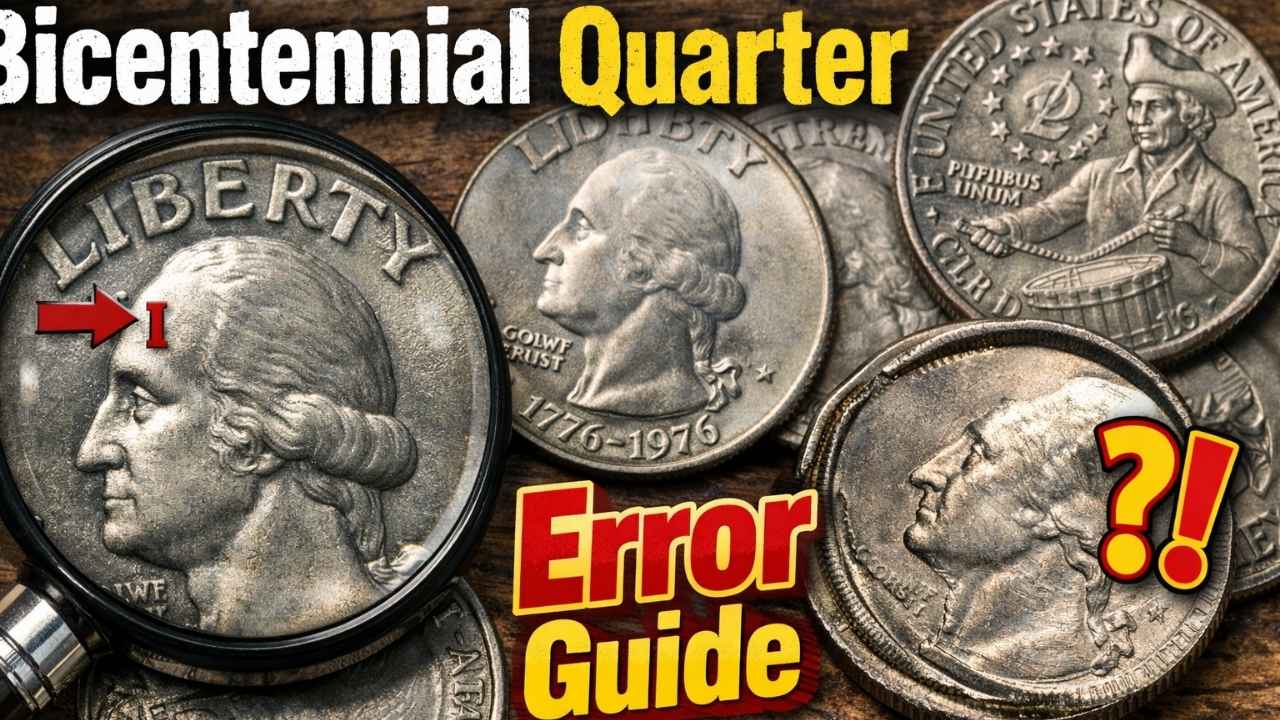
Bicentennial Quarter Error Guide: The Bicentennial Quarter was minted in 1975 and 1976 to celebrate the 200th anniversary of American independence. Unlike standard quarters, these coins carry the dual date 1776–1976 and feature a special reverse design. Millions were produced, but their unique appearance and historical significance have made them enduring favorites among collectors.
The Design and Its Symbolism
The obverse of the Bicentennial Quarter retained George Washington’s portrait, while the reverse showcased a colonial drummer with a torch encircled by thirteen stars. Designed by Jack L. Ahr, this imagery symbolized patriotism and the revolutionary spirit. It remains one of the most recognizable commemorative coin designs in U.S. history.

Minting and Variations
The Bicentennial Quarter was produced in both copper-nickel clad versions for circulation and silver-clad versions for collectors. Proof sets and uncirculated sets were also issued, adding further diversity to the coin’s legacy. These variations are crucial in determining value today.
Table of Compositions
| Type | Composition | Intended Use |
|---|---|---|
| Circulation | Copper-nickel clad | Everyday transactions |
| Collector | 40% silver, 60% copper | Proof and uncirculated sets |
Common Errors and Varieties
Errors are what make some Bicentennial Quarters worth far more than their face value. Collectors look for anomalies such as:

- Double die obverse or reverse
- Off-center strikes
- Weak or missing details in the drummer’s design
- Coins struck on the wrong planchet
These rare varieties are highly sought after and can command significant premiums.
Value in 2026
By 2026, the value of Bicentennial Quarters continues to surprise collectors. While most circulated examples remain close to face value, pristine coins, silver issues, and error varieties can be worth far more. Auction records show strong demand for high-grade specimens.
Value Chart for Bicentennial Quarters (2026 Estimates)
| Type | Condition | Estimated Value |
|---|---|---|
| Circulation copper-nickel | Circulated | $0.25–$1 |
| Circulation copper-nickel | Uncirculated | $5–$15 |
| Silver-clad | Circulated | $10–$20 |
| Silver-clad | Uncirculated | $30–$100 |
| Error varieties | Variable | $500–$5,000+ |
How to Spot Valuable Errors
Collectors should carefully examine Bicentennial Quarters using magnification and good lighting. Look for doubling in the date or lettering, off-center strikes, or unusual coloration that might indicate a wrong planchet. Comparing coins to reference images in numismatic guides can help confirm whether an error is genuine.
Preservation and Collecting Tips
To maintain value, coins should be stored in protective holders to prevent wear and environmental damage. Professional grading services can authenticate coins and assign value, which is especially important for rare varieties. Building a complete set of Bicentennial coins, including half dollars and dollars, is a popular collecting goal.

Conclusion
The Bicentennial Quarter remains a fascinating piece of American coinage. In 2026, its value continues to surprise, with rare varieties and silver issues commanding impressive premiums. More than just currency, it is a symbol of history, patriotism, and the enduring appeal of coin collecting. For both seasoned numismatists and beginners, the Bicentennial Quarter offers a rewarding journey into the world of rare coins.