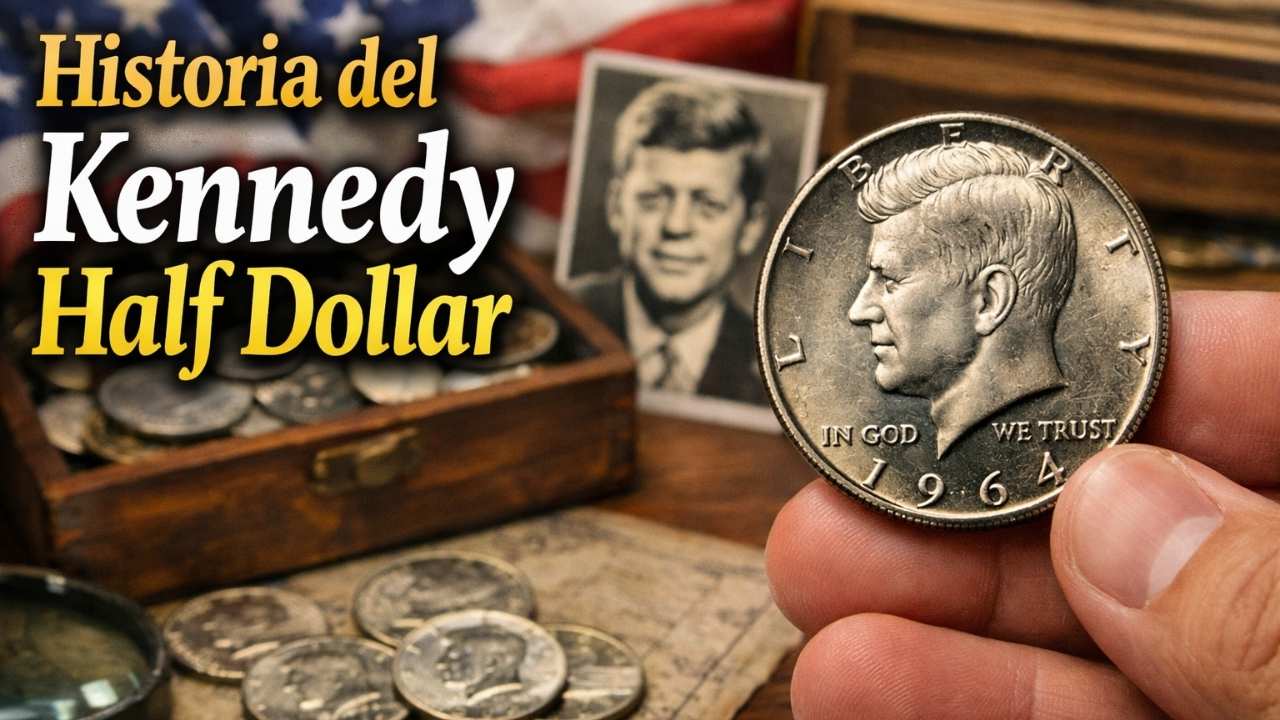
Kennedy Half Dollar History: The Kennedy Half Dollar of 1964 is more than a coin. It is a piece of American history forged in the wake of tragedy. Following the assassination of President John F. Kennedy in November 1963, the United States Mint moved with unprecedented speed to honor the fallen leader. Within months, the coin was designed, approved, and released to the public. It became an immediate sensation, a tangible way for citizens to hold onto the memory of a president who had inspired hope and progress.
The Design and Its Meaning
The coin’s design was created by Chief Engraver Gilroy Roberts and Assistant Engraver Frank Gasparro. The obverse features Kennedy’s profile, a strong yet youthful image that captured his charisma. The reverse displays the presidential seal, with the eagle clutching arrows and an olive branch, symbolizing both strength and peace. Every detail was chosen to reflect Kennedy’s vision for America and the enduring resilience of the nation.

The Public Frenzy of 1964
When the coin was released in March 1964, demand was overwhelming. Banks were flooded with requests, and long lines formed as people sought to secure their own piece of history. Although more than 273 million coins were minted, most were quickly removed from circulation. Families stored them away as keepsakes, and collectors began to recognize their potential value. The Kennedy Half Dollar became not just currency but a cherished relic of national mourning and remembrance.
Composition and Transition
The 1964 issue was struck in 90 percent silver, making it both historically significant and materially valuable. Beginning in 1965, the silver content was reduced to 40 percent, and by 1971, the coin was made entirely of copper-nickel. This shift reflected broader economic pressures and the rising cost of silver. As a result, the 1964 edition stands apart as the last half dollar with a high silver content, enhancing its rarity and desirability.

Table of Compositions
| Year | Composition | Silver Content |
|---|---|---|
| 1964 | 90% silver, 10% copper | 12.5 grams of silver |
| 1965–1970 | 40% silver, 60% copper | 4.6 grams of silver |
| 1971 onward | Copper-nickel | 0 grams of silver |
Historical and Numismatic Value
The Kennedy Half Dollar of 1964 carries dual value: its intrinsic silver worth and its historical significance. Collectors prize it not only for its composition but also for its emotional resonance. Prices vary depending on condition, mint mark, and rarity. Uncirculated or proof versions can command substantial premiums, while circulated examples remain accessible yet treasured.
A Reflection of Society
The coin illustrates how everyday objects can become symbols of national identity. In a time of grief, the Kennedy Half Dollar served as a unifying artifact, reminding Americans of their shared loss and collective resilience. It was more than money; it was a bridge between past and future, a reminder that the nation could endure even after tragedy.
Rediscovery in Modern Times
Today, the 1964 Kennedy Half Dollar reemerges as a rare treasure in auctions, private collections, and family inheritances. Its value has grown steadily, driven by both its silver content and its historical aura. Each coin tells a story of a nation in mourning, of citizens seeking comfort in a tangible symbol, and of a leader whose legacy continues to inspire.
Collecting and Preservation
Collectors often seek specific variations, such as proof strikes or coins with mint marks from Denver or Philadelphia. Proper preservation is essential to maintain value. Coins stored in protective holders, away from moisture and handling, retain their luster and command higher prices. The pursuit of these coins has become a passion for numismatists worldwide, blending history, art, and economics.

Conclusion
The Kennedy Half Dollar of 1964 is not merely a coin. It is a testament to history, a memorial to a president, and a rare treasure that connects generations. Its rarity, symbolism, and emotional weight make it one of the most significant coins in American numismatic history. For collectors and citizens alike, it remains a powerful reminder of a time when a nation turned to a simple piece of silver to honor its fallen leader.