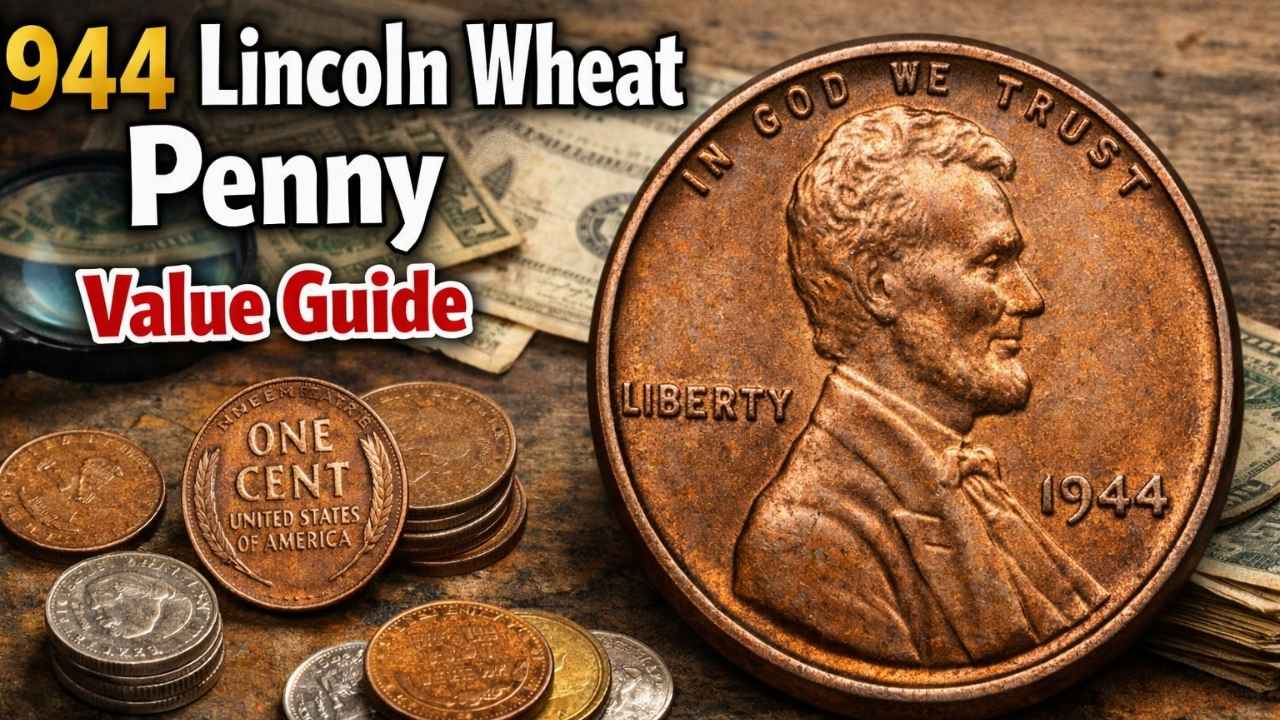
1944 Lincoln Wheat Penny Value Guide 2026: The Lincoln Wheat Penny is one of the most iconic coins in American numismatics. Minted from 1909 to 1958, it features the enduring image of Abraham Lincoln on the obverse and two wheat stalks on the reverse. Among all the years of production, the 1944 issue stands out for its wartime origins, its unique varieties, and its lasting appeal to collectors. In 2026, this penny continues to be a fascinating piece of history and a valuable collectible.
Historical Background
The year 1944 was deeply shaped by World War II. In 1943, the U.S. Mint had produced pennies made of steel to conserve copper for military needs. These coins were unpopular, as they rusted easily and were often mistaken for dimes. By 1944, the Mint returned to copper, but the source was unusual: recycled shell casings from military training grounds. This gave the 1944 penny a symbolic connection to the war effort, making it more than just currency—it became a token of resilience and sacrifice.

Design Features
The obverse of the coin shows Lincoln’s profile, designed by Victor David Brenner. The reverse features two wheat stalks framing the words “One Cent.” The design is admired for its simplicity and elegance, reflecting early 20th-century artistry. The 1944 penny was composed primarily of copper, with small amounts of tin and zinc, distinguishing it from the steel pennies of the previous year.
Mint Marks and Production
The 1944 Wheat Penny was struck at three major mints:
- Philadelphia Mint: No mint mark, the most common issue.
- Denver Mint: Marked with a “D.”
- San Francisco Mint: Marked with an “S.”
Philadelphia produced the largest number, making those coins relatively easy to find. Denver and San Francisco issues are scarcer, though still widely available compared to rarities.
Rare Varieties and Errors
Collectors prize certain unusual varieties:
- 1944 Steel Penny: A few were mistakenly struck on leftover steel planchets from 1943. These are extremely rare and can fetch tens of thousands of dollars.
- Double Die Obverse: Some coins show doubling in the inscriptions, adding significant value.
- Off-Center Strikes: Errors where the design is misaligned, appealing to error collectors.
These varieties are the gems of the 1944 series, often commanding prices far beyond standard issues.
Value in 2026
The value of a 1944 Wheat Penny depends on condition, rarity, and demand:

- Circulated Philadelphia issues often trade for a few cents to a dollar.
- Uncirculated examples can reach $10 to $50.
- Denver and San Francisco mint marks in high grades may sell for $50 to $200.
- Rare steel pennies and major errors can exceed $100,000, with some auction records approaching $373,750.
Grading plays a crucial role. Coins certified by professional services such as PCGS or NGC often command premiums.
Collectors’ Trends in 2026
The coin market in 2026 shows several trends:
- Rising interest in wartime coins, driven by historical significance.
- Increased demand for certified high-grade examples, as collectors seek investment security.
- Growing popularity of error coins, with younger collectors fascinated by unusual varieties.
- Online auctions and marketplaces expanding accessibility, allowing global participation.
The 1944 Wheat Penny benefits from these trends, remaining a staple in collections and a gateway coin for beginners.
Historical Significance
Beyond monetary value, the 1944 Wheat Penny symbolizes America’s wartime resilience. Its copper composition, derived from recycled shell casings, reflects the nation’s resourcefulness. For many collectors, owning this coin is like holding a piece of history, a tangible reminder of sacrifice and ingenuity.

Tips for Collectors
For those interested in acquiring 1944 Wheat Pennies:
- Focus on condition: Higher grades yield better returns.
- Verify authenticity: Beware of altered coins, especially fake steel pennies.
- Consider certification: Professional grading adds credibility.
- Diversify: Collect across mint marks and varieties.
- Stay informed: Follow auction results and market updates.
These strategies help collectors build meaningful and valuable collections.
Auction Highlights
Over the years, auctions have showcased remarkable 1944 Wheat Pennies. Steel varieties often headline sales, drawing intense bidding. In 2026, auction houses continue to report strong interest, with rare examples achieving record prices. Collectors view these coins not only as numismatic treasures but also as investments.
Conclusion
The 1944 Lincoln Wheat Penny remains a fascinating coin in 2026. Its wartime origins, design, and rare varieties make it a cornerstone of American numismatics. Whether worth a few cents or hundreds of thousands of dollars, each coin tells a story of history, resilience, and collecting passion. For enthusiasts, the journey of exploring this penny is as rewarding as the coin itself.